
Syracuse Genealogy Records
Syracuse genealogy records reach back to 1872, well before New York State began collecting vital records in 1880. The Syracuse City Clerk holds birth, death, and marriage records that you cannot find at the state level for those early years. Onondaga County adds land deeds from 1794, court files, naturalization papers, and census records to the mix. Searching for ancestors in Syracuse means working with both city and county offices, plus the Onondaga County Public Library and the Onondaga Historical Association. Each one fills gaps that the others leave open. Start with the type of record you need, then work outward from there.
Syracuse Genealogy Overview
Syracuse City Clerk Genealogy Records
The Syracuse City Clerk is the first place to check for vital records in the city. The office holds birth records from 1872 to the present, death records from 1872, and marriage records from 1872. Syracuse is one of a small number of cities outside New York City that kept its own vital records before the 1880 state mandate. This makes the City Clerk's office a critical stop for genealogy work.
Records from 1872 through 1913 are not at the New York State Department of Health. The City Clerk is the only source for these early files. If you are looking for a birth, death, or marriage that took place in Syracuse during those years, you must contact this office. There is no other way to get them. The collection also includes burial permits and city health department records from various years that can help piece together family timelines.
The office sits at City Hall, 233 E. Washington Street, Room 105, Syracuse, NY 13202. Phone is (315) 448-8216. Hours run Monday through Friday, 8:30 AM to 4:30 PM. Staff keep physical indexes to vital records that you can look through during business hours. The indexes are sorted by date and searchable by last name. Genealogical copies cost $10 to $15 each. Certified copies run $15 to $20. You can pay by check, money order, or cash in person. Mail requests are also accepted if you include the full name on the record, the date, the record type, and a note that it is for genealogy.
Onondaga County Records for Syracuse Genealogy
The Onondaga County Clerk holds records that fill in what the city clerk does not cover. Marriage records from 1908 to 1935 are on file here, along with land records going back to 1794. Court records start in 1795. Naturalization records span the 1800s through the 1950s, and Civil War veteran discharge papers are also part of the collection. State census records and divorce records round out the holdings.
The office is at the County Courthouse, 401 Montgomery Street, Syracuse, NY 13202. Call (315) 435-2226 for help. Land records are indexed by grantor and grantee, so you search by name and date range. These records are useful when you need to place an ancestor at a specific address or track property that passed through a family.
Onondaga County is unusual in New York because birth and death records sit with the Office of Vital Statistics rather than with individual town clerks. That office has birth and death records from 1865 to the present and marriage records from 1880 forward. The address is 421 Montgomery Street, Room 20, Syracuse, NY 13202. Phone is (315) 435-3241. Request forms are available at the office or online, and fees apply for both the search and the copy.
Syracuse Genealogy at the Onondaga County Library
The Onondaga County Public Library Central Branch is one of the official repositories for the New York State Vital Records Index microfiche collection. This means you can search indexes to state births from 1881 onward, state marriages from 1881, and state deaths from 1880 right here in Syracuse. You do not need to go to Albany.
The library also holds census records, city directories, newspapers on microfilm, and published family histories. City directories can help you find where an ancestor lived and what they did for work. Newspapers on microfilm sometimes carry birth announcements, marriage notices, and obituaries that are not in any official record. The Central Library is at 447 South Salina Street, Syracuse, NY 13202. Phone is (315) 435-1900.
Note: The microfiche indexes cannot be copied, loaned, or sold per state rules.
Onondaga Historical Association and Syracuse Research
The Onondaga Historical Association Museum and Research Center keeps historical manuscripts, photographs, a research library, and genealogy materials. This is the place to look when official records fall short. Church records, old letters, local histories, and family papers sometimes turn up here that you cannot find at any government office.
The Onondaga Historical Association website shows what the research center holds for Syracuse genealogy.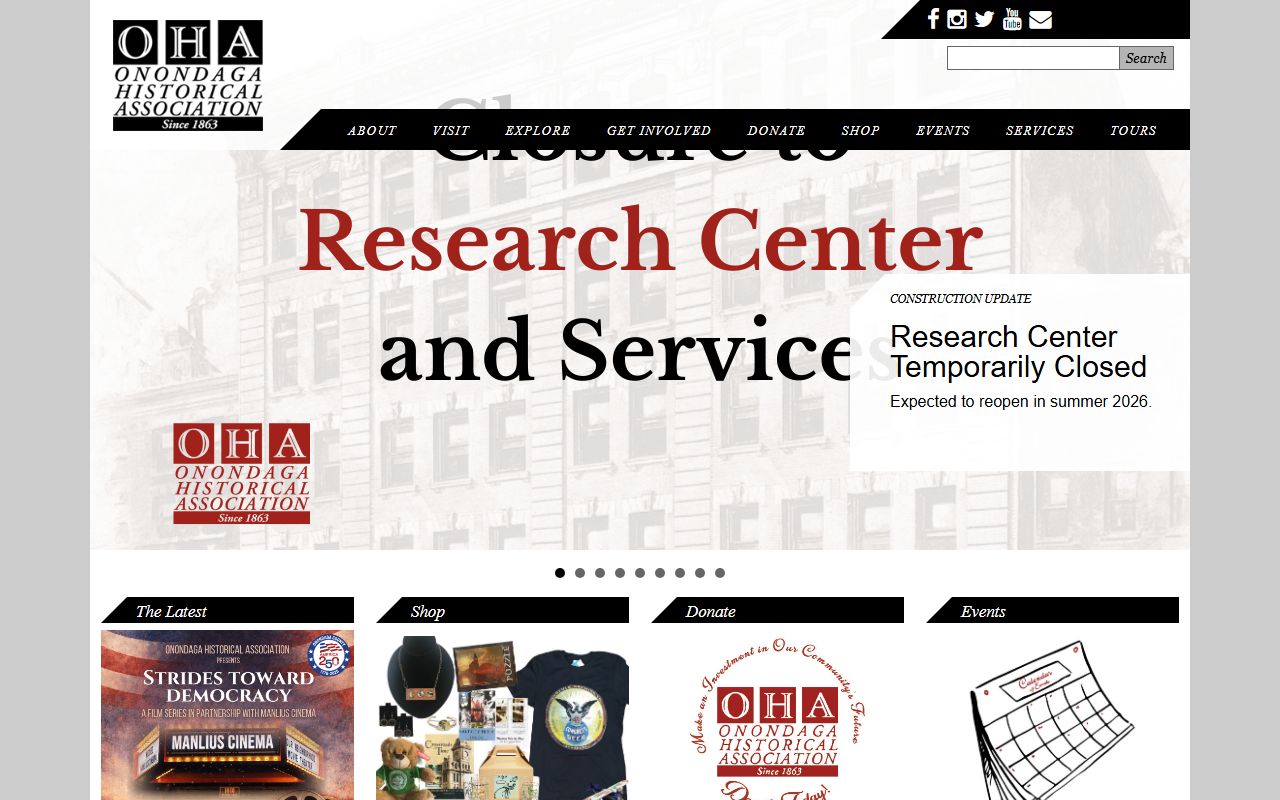
The center is at 321 Montgomery Street, Syracuse, NY 13202. Phone is (315) 428-1864. If you are looking for early families in the Syracuse area, this collection can sometimes break through dead ends that court records and vital records leave behind.
Syracuse Probate and Estate Records
The Onondaga County Surrogate's Court has probate records from 1796 to the present. Wills, estate inventories, guardianship papers, and letters of administration are all on file. A will can name children, in-laws, or grandchildren who do not show up in any census or vital record. Estate inventories list property and possessions, giving you a snapshot of how an ancestor lived.
The court is at 401 Montgomery Street, Syracuse, NY 13202. Phone is (315) 671-2098. Under the Surrogate's Court Procedure Act, you can request copies of wills and estate files by writing to the court with the name of the person who died and the approximate date of death. FamilySearch has microfilmed some Onondaga County probate records, so check the FamilySearch catalog before making a trip.
State Resources for Syracuse Genealogy
The New York State Archives in Albany holds indexes to vital records that cover Syracuse and all of Onondaga County. Birth indexes go through 1937. Death and marriage indexes are released after 50 years. These are index entries only, with names, dates, and state file numbers. You need the file number to order a copy from the NYS Department of Health.
The Department of Health charges $22 for a three-year search. Fees go up with the time span, topping out at $202 for an 81-90 year search. Processing can take eight months or more. Under Public Health Law Sections 4173 and 4174, birth certificates are available after 75 years if the person is known to be dead. Death certificates open after 50 years. Marriage certificates open after 50 years if both spouses are dead.
Sending your request to the Syracuse City Clerk or the Onondaga County Office of Vital Statistics is often faster than going through the state. Local offices tend to have shorter wait times and can sometimes pull records while you are there in person.
Reclaim The Records won a court case in 2025 that opened the full New York State Death Index from 1880 to 2017. You can now download more than 10 million death records for free from their site, including deaths in Syracuse. The data includes names, dates of death, ages, and state file numbers.
Tips for Syracuse Genealogy Research
Onondaga County was formed from Herkimer and Tioga counties in 1794. If your ancestor was in this area before that year, check those parent counties for earlier land deeds, court records, and tax rolls. The county clerks in Herkimer and Tioga may have files from the years before Onondaga County existed.
The New York State Census was taken in 1825, 1835, 1845, 1855, 1865, 1875, 1892, 1905, 1915, and 1925. These fill in the gaps between federal census years and sometimes include birthplace, occupation, and years of residence that the federal census left out. Many of these are available through FamilySearch or at the county clerk's office. New York residents can also access colonial wills and probate records free through Ancestry.com New York.
Nearby Cities for Genealogy Research
Families in central New York often crossed city and county lines. Check these nearby locations for related records.