
Find New York Genealogy Records
New York genealogy records span more than 350 years of state and local history. You can search for birth, death, and marriage records through the state Department of Health, or look through land deeds and probate files at the New York State Archives. Each of the 62 counties keeps its own set of records at the county clerk and surrogate's court. Millions of New York genealogy documents have been put online through sites like FamilySearch, Ancestry, and the NYC Municipal Archives. Whether you trace roots to colonial Dutch settlers or more recent arrivals, the state holds one of the deepest record collections in the country for family history research.
New York Genealogy Overview
New York Genealogy Vital Records
The New York State Department of Health is the main source for birth, death, and marriage records outside of New York City. Statewide registration started in 1880 for deaths and 1881 for births and marriages. Compliance was spotty at first, so some early records are missing. The Department of Health does not hold records for events that took place in New York City, Albany, Buffalo, or Yonkers before 1914. Those cities kept their own vital records systems.
Access rules vary by record type. Birth certificates are available after 75 years if the person on the record is known to be dead. Death certificates open up after 50 years with no extra rules. Marriage certificates need 50 years to pass, and both spouses must be dead. Under Public Health Law Sections 4173 and 4174, direct-line descendants (a child, grandchild, or great-grandchild) can get records sooner if they show proof of the family link and proof of death. Fees start at $22 for a three-year search and go up from there based on the time span you need covered. Processing a genealogy request can take eight months or more, so sending it straight to the local registrar in the town where the event took place is often much faster.
The NYS Department of Health Vital Records portal provides forms and full instructions for genealogy requests.
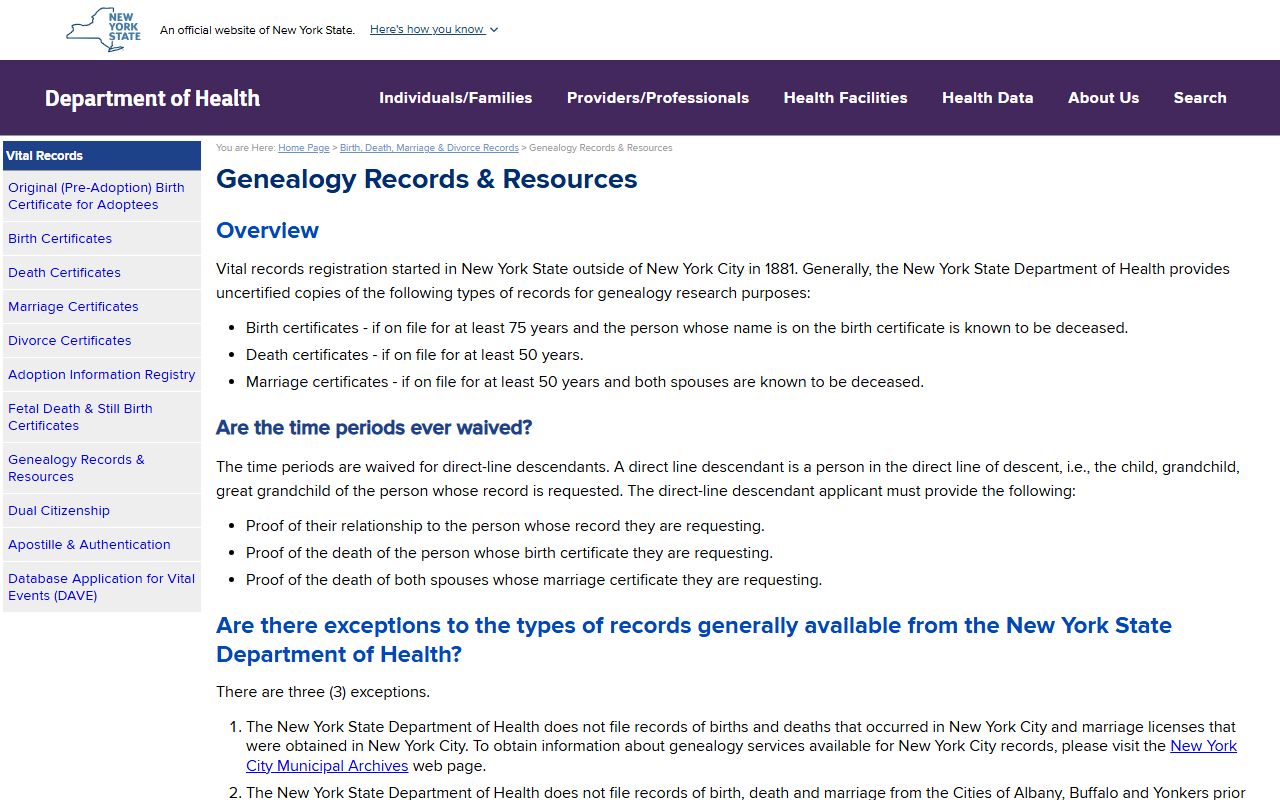
You can mail your request to Vital Records Section, PO Box 2602, Albany, NY 12220-2602, or drop off forms at 800 North Pearl St. in Menands.
State Archives Genealogy Resources
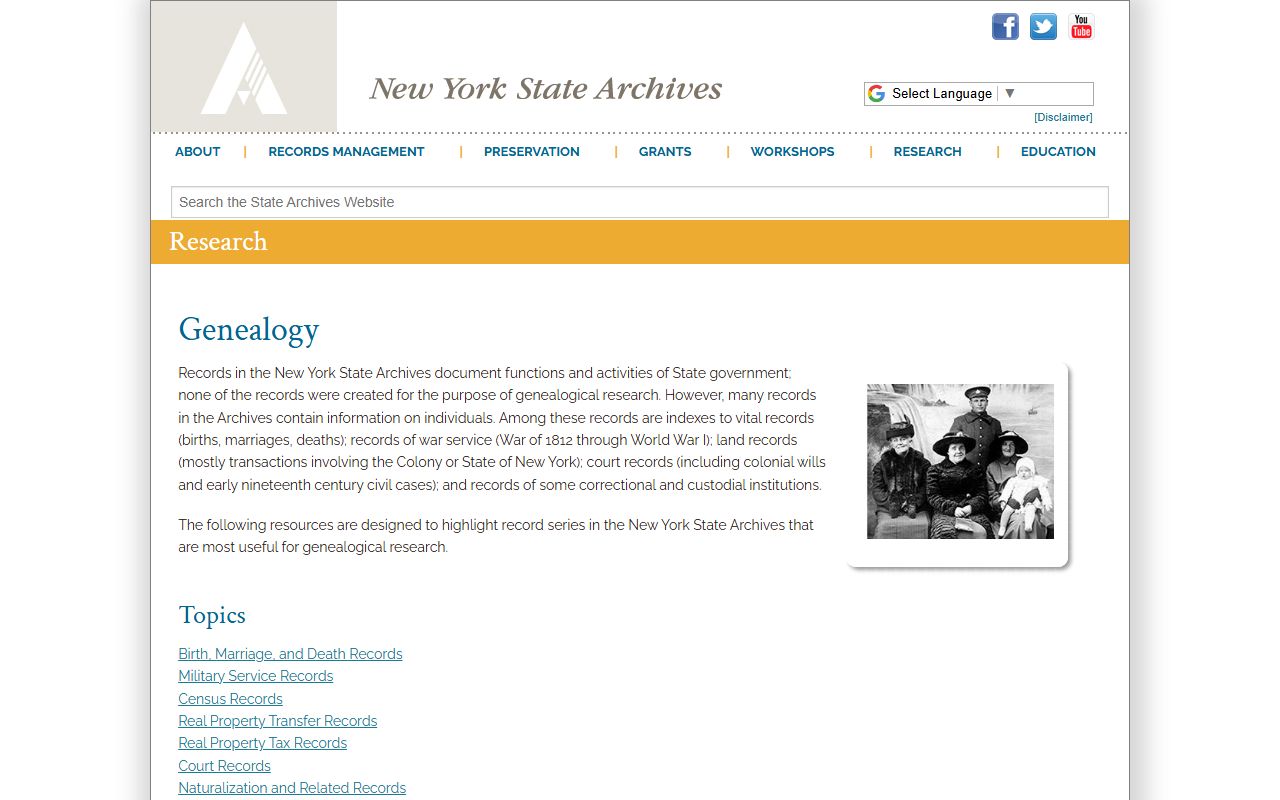
The New York State Archives holds more than 200 million documents from the 17th century to now. None of these records were made for genealogy on purpose, but many of them name real people and work well for family research. The Archives keeps vital records indexes for births, marriages, and deaths outside New York City. Birth indexes go through 1937 (a 75-year delay). Marriage and death indexes are released after 50 years.
You can visit the Archives at the Cultural Education Center on the Empire State Plaza in Albany. No appointment is needed. Bring a photo ID and fill out a registration form. If others are waiting, use of the vital records indexes is limited to one hour. Copies of the microfiche indexes also sit at 11 locations across the state, from the Broome County Public Library in Binghamton to the National Archives at One Bowling Green in New York City. Under Arts and Cultural Affairs Law Section 57.05, the State Archives acquires and preserves official records, and access rules come from NYCRR Title 8, Sections 188.24 through 188.28.
The NYS Archives genealogy resources page links to finding aids and research guides.
Electronic death index data from 1957 onward is also posted on the DOH Open Data platform, with fields for name, date of death, gender, and state file number.
New York Genealogy at the State Library
The New York State Library in Albany has one of the busiest genealogy sections in the state. The Local History and Genealogy area holds family histories, reference works, and the FamilySearch CD-ROM series. The collection covers New York, Pennsylvania, New Jersey, and New England families. Materials cannot leave the building. You have to use them on-site during regular library hours.
Library staff can help you plan a research strategy but they will not do genealogy searches for you. The Capital District Genealogical Society has volunteers at a desk near the service counter who can show you the online catalog and get you started at no cost. Call the Reference Desk at (518) 474-5161 before your visit to make sure a volunteer is there that day. The Microform Area on the 7th Floor has readers and printers for microfilm and microfiche. Some collections are stored off-site and can take several business days to bring in.
The NYS Library genealogy collections page describes the full scope of holdings available for research.
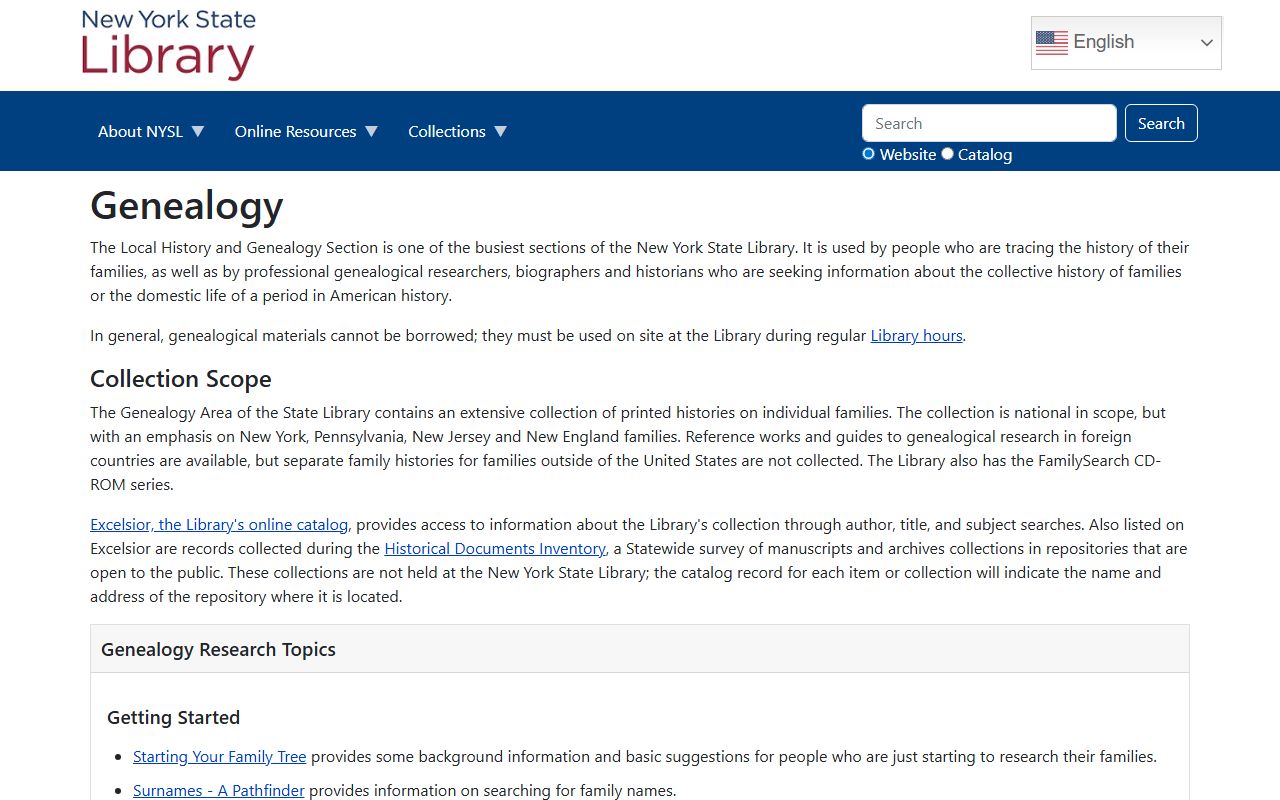
The library is at 222 Madison Avenue, Cultural Education Center, Albany, NY 12230. The Reference desk is open 9 AM to 5 PM Monday through Friday and 9:30 AM to 5 PM on Saturday.
Probate and Estate Records
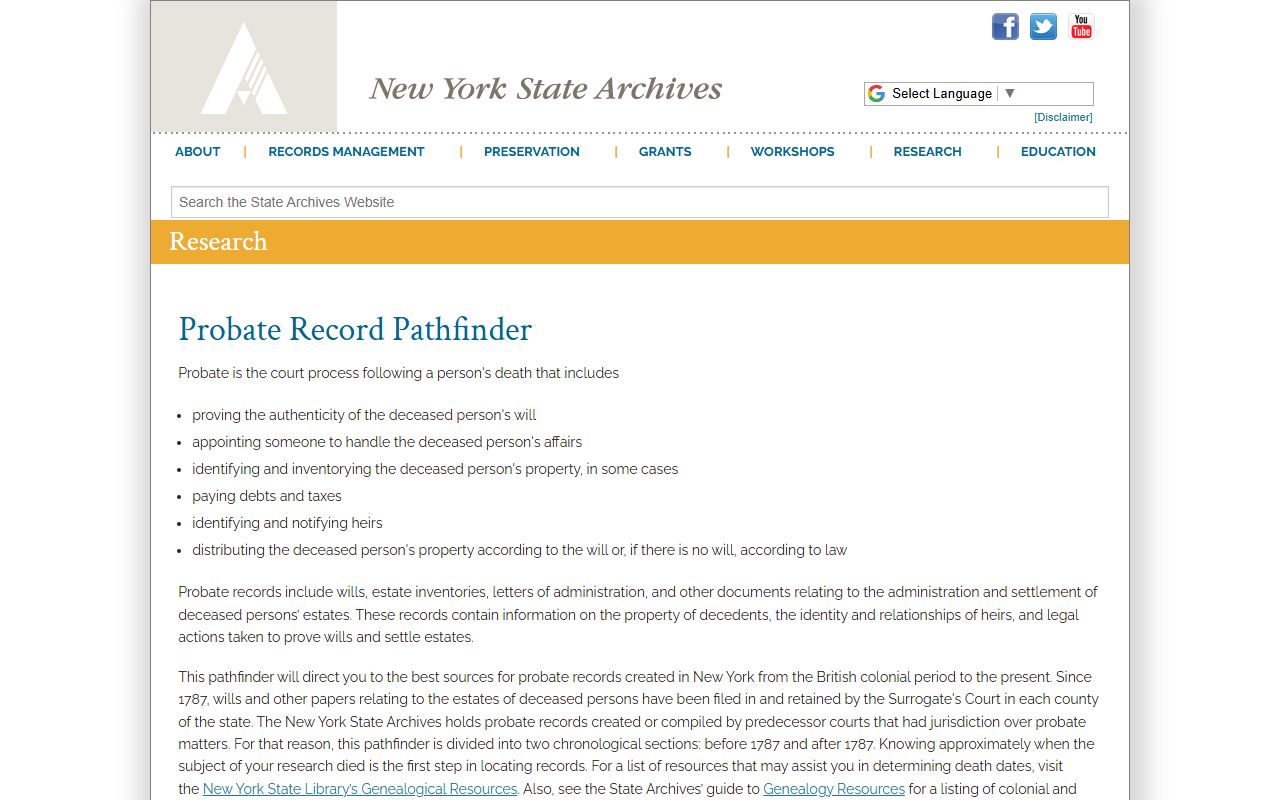
Probate records are some of the richest sources for New York genealogy. The New York State Archives probate records page explains the court structure going back to the colonial era. The Prerogative Court handled probate matters from 1665 to 1783. The Court of Probates ran from 1778 to 1823. Since May 1, 1787, each county has had a Surrogate's Court that proves wills and handles estate settlements under the Surrogate's Court Procedure Act.
Colonial wills from 1665 to 1815 are at the State Archives on microfilm. Many of these have been digitized and are free to New York residents through Ancestry.com. Estate inventories cover 1666 to 1822. Administration papers go from about 1700 to 1823. For records after 1787, you need to contact the Surrogate's Court in the county where the person lived. Send a written request by mail with the decedent's name and date of death. Courts do not take email requests for these records. The Estates, Powers and Trust Law governs wills, intestate succession, and trusts in New York.
The NYS Archives probate records research guide is a good starting point for estate files.
FamilySearch has microfilmed many county surrogate's court records as well. Check the FamilySearch catalog for your county of interest.
Land and Property Records
New York genealogy research often leads to land records. The New York State Archives land records collection goes back to Dutch colonial patents and deeds from 1630. Indian treaties and deeds run from 1703 to 1847. British colonial land grants start in 1664. State land sales cover 1786 to 1927. These records document who owned what, when they bought or sold it, and sometimes who lived on the land with them.
At the county level, the county clerk in each of the 62 counties keeps deeds, mortgages, and liens. Most counties have land records going back to the date they were formed. Some have put indexes online, while others still use grantor/grantee books in the office. Copy fees are typically $0.65 per page with certification at $5.00 per document.
The NYS Archives land records page lists all available series, from Dutch colonial deeds to 20th-century state property files.
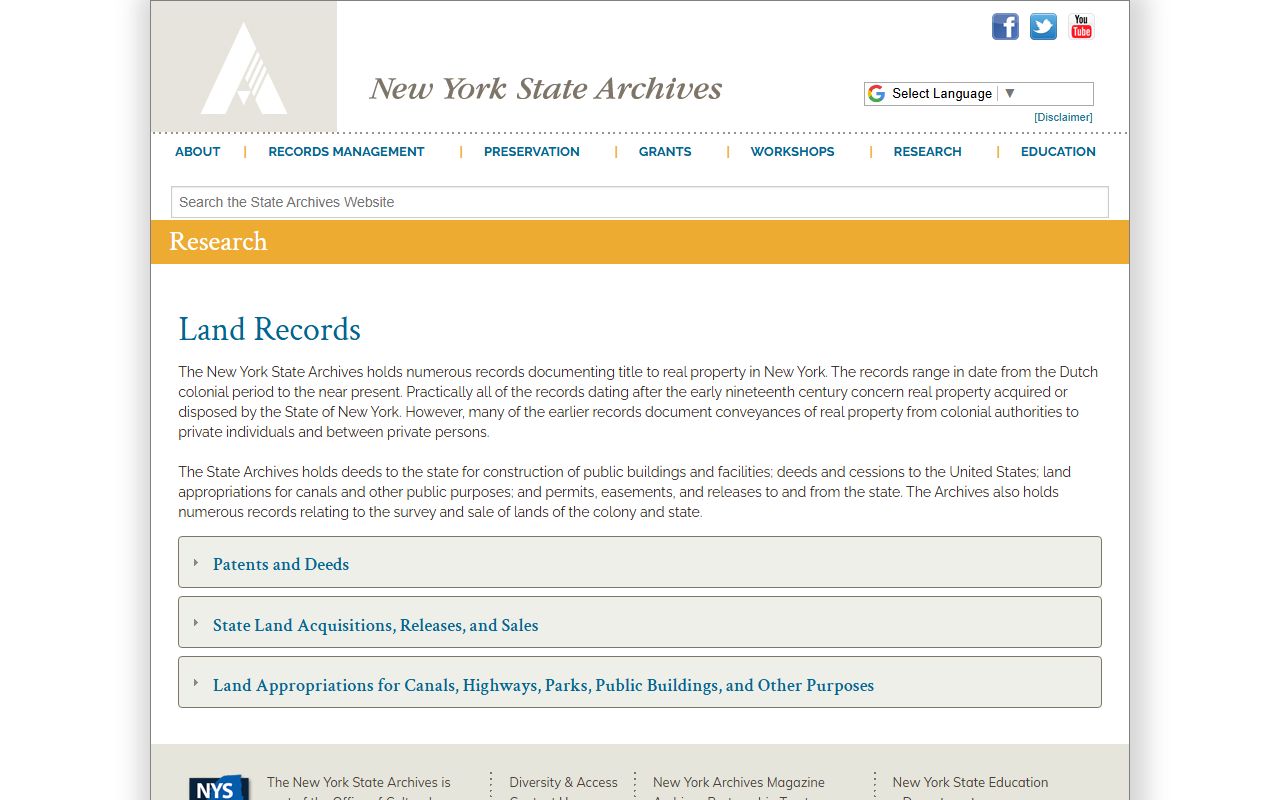
Tax sale records and forfeited estate files from the Revolutionary War era can also help pin down where ancestors lived and what they owned.
Military Records for New York Genealogy
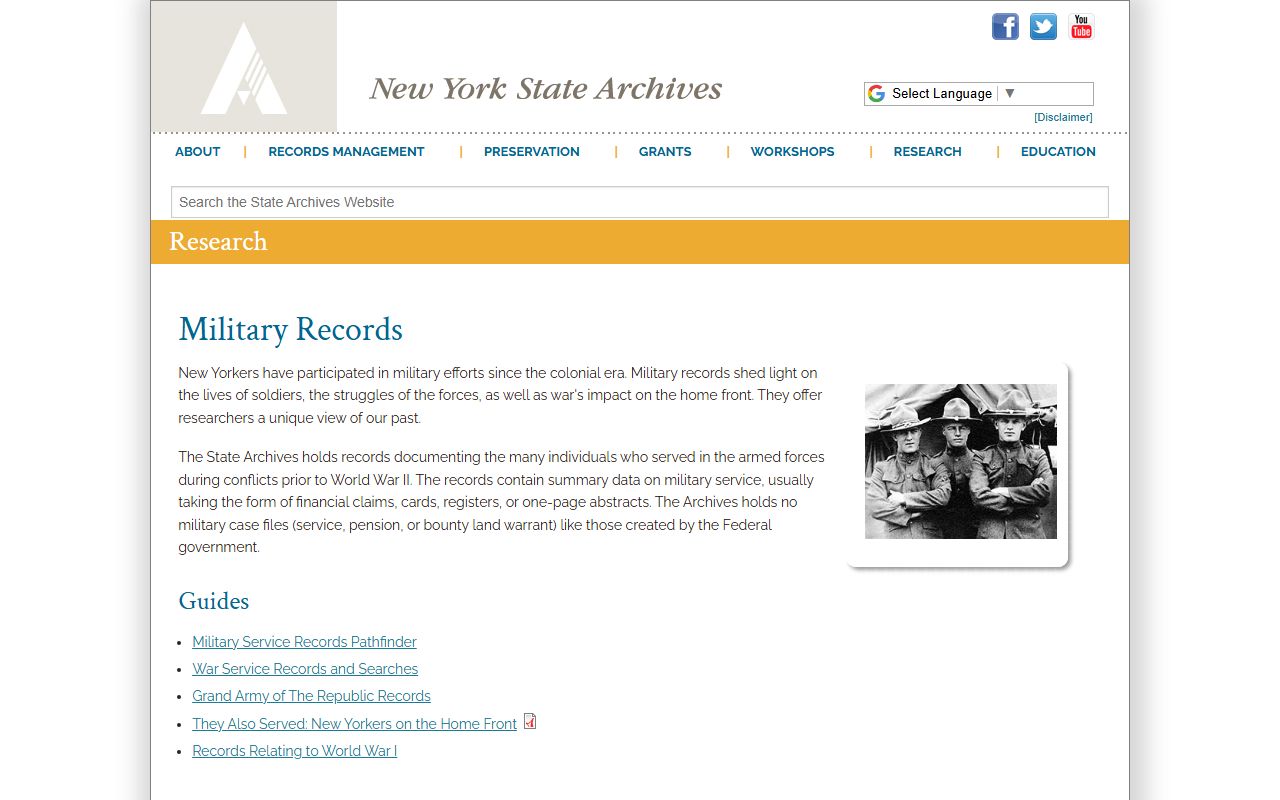
The New York State Archives military records cover conflicts from the colonial era through World War I. The Archives does not hold the kind of detailed service files, pension records, or bounty land warrant files that the federal government keeps. Instead, you get summary data: muster rolls, pension certificates, claims, and one-page abstracts.
Key series include Civil War muster roll abstracts, Revolutionary War pension certificates, and Mexican War pension claims for the First New York Regiment Volunteers. Research guides are available for GAR (Grand Army of the Republic) records, town clerks' Civil War registers, and World War I service records. Search the Archives finding aids at the NYS Archives website to find specific collections.
For federal military records, the National Archives at New York City (One Bowling Green) is another key resource for New York genealogy researchers.
NYC Genealogy Records
New York City has its own records system that runs separate from the state. The NYC Municipal Archives holds historical vital records for all five boroughs. Manhattan birth records go back to 1847, and death records to 1795. Brooklyn death records start in 1847. The Bronx, Queens, and Staten Island have records from 1898 when they joined the city. About 25 percent of births before 1910 were never reported, so gaps are common in the early years.
The Municipal Archives has digitized millions of records. PDF copies can be emailed within about five days for records already digitized. In-person research at 31 Chambers Street (Room 103) in Manhattan is by appointment only. For more recent records, the NYC Department of Health handles birth certificates from 1910 onward and death certificates from 1949 onward.
Check the Municipal Archives portal for online ordering and appointment scheduling.
Free Online Genealogy Databases
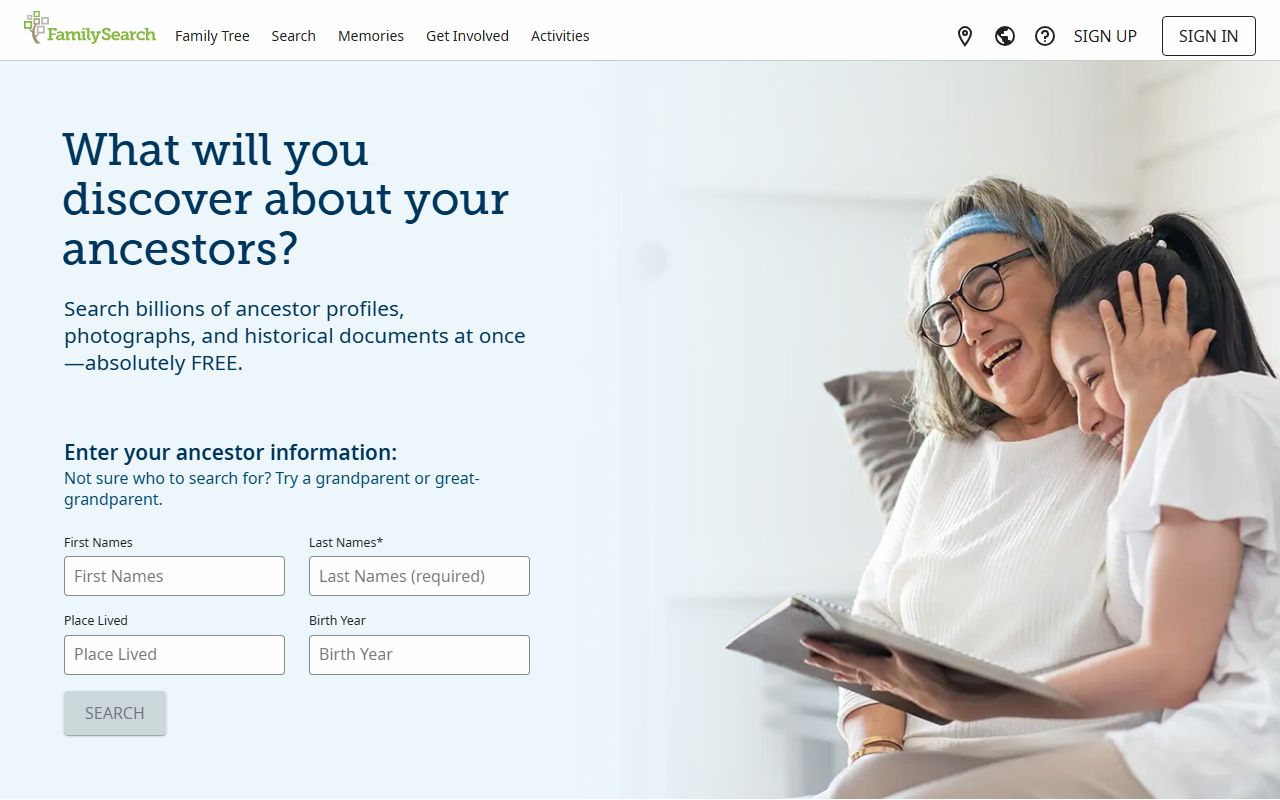
FamilySearch offers free access to millions of New York genealogy records. The site has state census records, probate files from many counties, church records, naturalization papers, and land records. You need a free account to use it. Many records are digitized but not yet indexed, so browsing image by image is sometimes the only option.
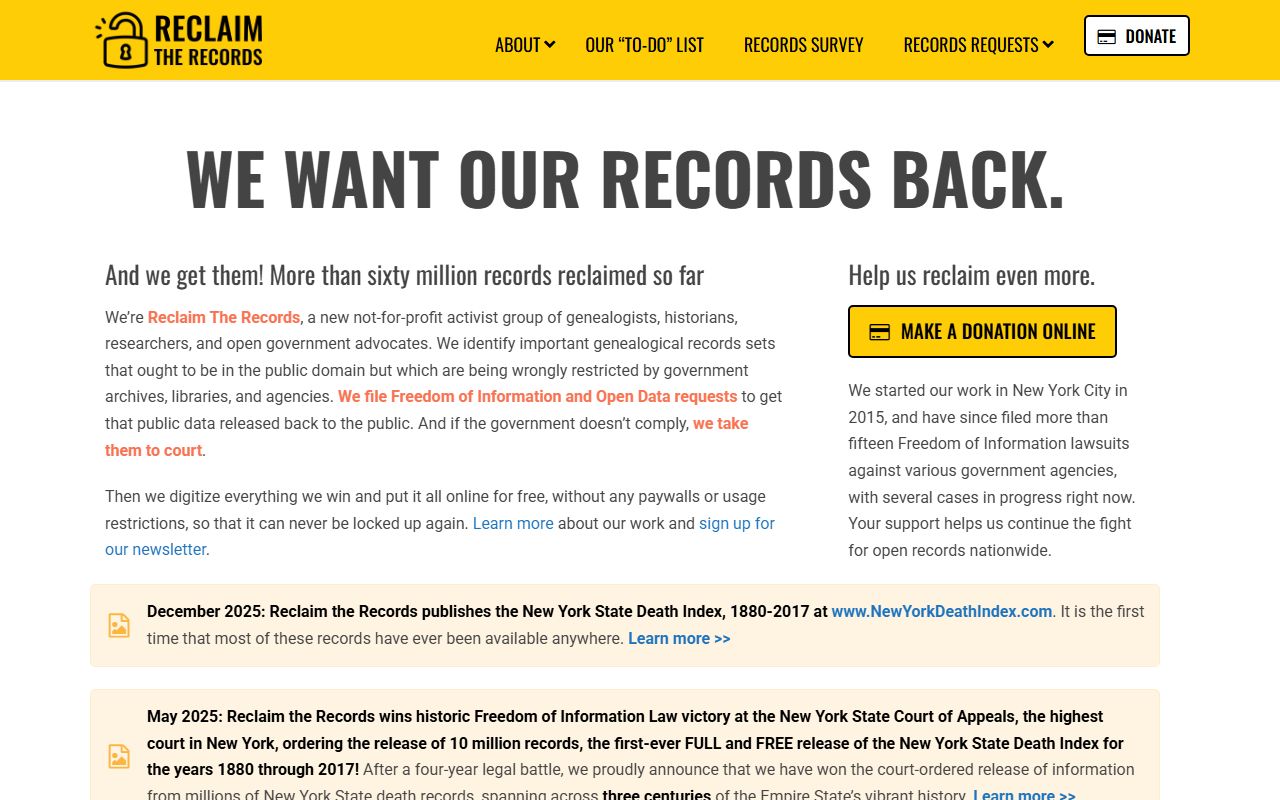
Reclaim The Records is a nonprofit that uses open government laws to make genealogy records public. In May 2025, a Court of Appeals ruling opened up the full New York State Death Index from 1880 to 2017, covering more than 10 million records. Names, dates of death, residences, ages, gender, and state file numbers are all included. The data is free to download in searchable formats from their website. Under Public Officers Law Article 6 (the Freedom of Information Law, Sections 84 through 90), government records in New York carry a presumption of openness, though vital records themselves are accessed through the Department of Health under Public Health Law rather than through FOIL.
New York residents can also access colonial wills, military records, and state census data for free through Ancestry.com's New York partnership at ancestry.com/ny/.
The FamilySearch New York page lets you browse the catalog by county for specific record sets.
New York ran its own state census in 1825, 1835, 1845, 1855, 1865, 1875, 1892, 1905, 1915, and 1925. These fill gaps between federal census years and often include details like birthplace and occupation that the federal forms left out.
How to Access New York Genealogy Records
Most New York genealogy records can be reached three ways: online, by mail, or in person. Online databases like FamilySearch and the DOH Open Data platform are free. State Department of Health mail requests cost $22 and up. County clerks charge $0.65 per page for copies, with $5.00 for certification. Surrogate's courts set their own fee schedules for probate searches.
When you visit in person, the State Archives in Albany is open without appointment. Bring ID and fill out a registration form. The State Library is next door in the same Cultural Education Center building. County offices are open Monday through Friday, usually 8:30 AM to 4:30 or 5:00 PM. Call first to check hours and ask what records they have on-site versus in storage.
The Committee on Open Government handles questions about public access to government records. Under the Personal Privacy Protection Law (Public Officers Law Article 6-A, Sections 91 through 99), agencies cannot share personal information when disclosure would be an unwarranted invasion of privacy. But genealogy records that meet the age requirements are routinely released. Naturalization records from before 1906 are at various county offices. Post-1906 records are federal and held by the National Archives.
Note: Psychiatric center patient records are restricted under Mental Hygiene Law Section 33.13 and can only be accessed by qualified researchers with Institutional Review Board approval.
Browse New York Genealogy by County
Each of the 62 counties in New York has its own county clerk, surrogate's court, and local historian who can help with genealogy research. Pick a county below for local contact info and resources.
Genealogy Records in Major Cities
Many of New York's largest cities and towns have their own town clerks and local libraries with genealogy collections. Select a city below for local resources.